Rubbish Removal in Docklands
Rubbish Removal Docklands provides rubbish removal in Docklands for homes, flats, offices and commercial premises that need a straightforward clearance service. Our work covers everyday unwanted items, bulky loads, mixed household waste and trade waste that has built up over time, with a service shaped around practical access, loading and responsible disposal. If you need help clearing space quickly and sensibly, we can handle the collection and removal side of the job while keeping the process clear and easy to arrange.
The service is suitable for customers who want a tidy, one-off clearance rather than dealing with multiple trips, bags or hire arrangements. We work across a range of waste types, from furniture and general clutter to building and garden material, and the aim is always the same: remove the waste efficiently and leave you with a usable space. For an overview of what we do, see our services overview.
To compare common service types, think first about what needs removing, how much of it there is and whether any items need to be separated for easier handling. That simple check helps match the job to the right clearance approach. If you are planning a wider property tidy-up, a single collection can often be more practical than leaving items in place and trying to move them in stages. When you are ready, you can make a plain enquiry for a quotation and talk through the best option for your load.
Rubbish Clearance for Homes and Flats
Domestic rubbish clearance in Docklands is often about removing mixed items from rooms, cupboards, hallways, storage areas and communal access spaces. A one-off collection can help when household waste has accumulated, when a tenant move-out leaves unwanted items behind, or when a general clear-out produces more material than you want to handle yourself. We deal with the practical side of removal so the load can be taken away without leaving you with extra sorting or transport to manage.
For home customers, the work often includes furniture, bagged rubbish, broken items and a mixture of general clutter. Some loads are neat and straightforward, while others need a little more care because the items are awkward, fragile or difficult to lift from upper floors. If you want to understand how domestic and mixed rubbish removals are presented, the rubbish clearance page is a useful place to start.
Before booking, it helps to know whether the waste is mostly bulky items, loose rubbish or a combination of both. That distinction affects the time, loading method and vehicle space required. A short written list is usually enough to begin a quotation, and photos can be useful if the load is awkward or spread across several rooms. Keep the description simple, accurate and focused on what needs to go, then ask for a quote when you are ready.
Furniture, Bulky Items and Clearance of Unwanted Contents
Some jobs are best described by the type of item rather than the room it came from. Furniture disposal in Docklands can include wardrobes, sofas, tables, chairs, beds and other large pieces that are difficult to move through a property without help. We also deal with bulky contents that no longer serve a purpose, whether that is a single awkward item or a fuller load from a room, office or storage area. These collections are usually about careful lifting, sensible loading and removing items without unnecessary disruption.
Where useful, items may be grouped by size or by where they are stored, especially if the clearance involves a basement, loft, garage or shared access route. In practical terms, that helps the collection run more smoothly and makes it easier to decide whether the work is a simple pickup or a more involved clearance. You can read more about a typical bulky-item service on our furniture disposal page.
The most helpful information is often a plain description of what is being removed, how many pieces there are and whether anything is particularly heavy, awkward or hard to access. That lets the quotation reflect the real job rather than a rough guess. If you are dealing with mixed contents, it is sensible to mention both the large items and the smaller rubbish together, so the service can be priced and planned as one clear job. Ask for a quotation when you have the list ready.
House, Office and Garage Clearance Options
Different properties call for different kinds of clearance work. House clearance in Docklands is often needed when whole rooms, storage areas or full properties contain unwanted contents that need sorting and removal. Office clearance can involve desks, chairs, filing items, packaging and general business waste, while garage clearance usually focuses on stored items, old equipment and mixed clutter that has built up over time. Each type of job needs a practical plan, but the aim remains the same: remove the contents safely and leave the space easier to use.
Business customers often want a clear, orderly service that allows them to dispose of surplus items without disrupting everyday operations. Domestic customers may need the opposite: a calm, simple way to clear a property after years of storage or after a move. If you are looking at a full property task, our house clearance page explains one common domestic option, and the related pages can help you compare the best fit.
When a clearance is more involved, the easiest route is to note the type of property, the main categories of waste and any access points that matter, such as stairs, lifts or limited parking. That information helps set expectations and reduces avoidable delays. You do not need to write a long explanation; a concise summary is often enough for a quotation. If the load includes office material or garage contents, include those details in the same message rather than sending them separately.
Builders Waste, Garden Waste and Mixed Loads
Some clearances are based on the kind of waste produced by work rather than on a room or property type. Builders waste clearance in Docklands can cover offcuts, packaging, rubble, broken fixtures and other leftover material after refurbishment or repairs. Garden waste removal deals with green waste, cuttings, soil, small branches and outdoor debris. These are different streams of waste, but both benefit from a clear collection plan, especially where the load includes heavier material or mixed debris.
If a job combines household waste with renovation remnants or outdoor waste, it is usually better to treat it as one mixed collection instead of trying to separate the booking into several smaller requests. That can make it easier to identify the right service and avoid confusion about what is included. For a closer look at one trade-related option, see builders waste clearance.
Mixed loads are common, and they can be straightforward as long as the material is described clearly. List the main items, mention whether there is any heavy waste and say if the pile is indoors, outdoors or spread across multiple areas. Clear information helps the quotation feel fair and specific. If you are preparing a larger clearance, one accurate description is better than several separate messages that repeat the same details. When you are ready, ask for a quotation and the team can help identify the most suitable option.
How the Service Is Quoted and Planned
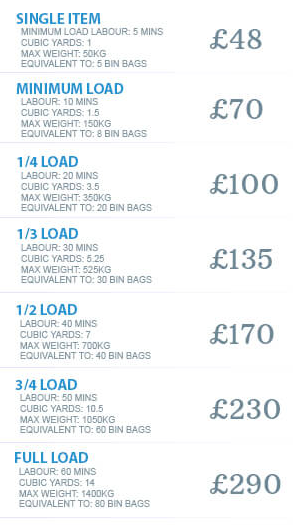
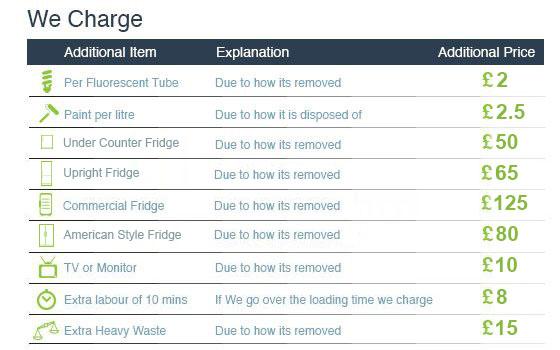
Rubbish removal work is usually priced by the amount and type of waste, along with the access needed to collect it. A small bagged load, a bulky furniture pickup and a full mixed clearance all require different levels of labour and vehicle space, so the quotation should reflect the actual job rather than a generic estimate. That is why a sensible description of the waste matters: it gives a better basis for pricing and helps make the collection day more predictable.
The most useful quotation details are usually simple. A short item list, a rough count of bags or large pieces, and a note about stairs, lifts, shared entrances or limited parking can be enough. You may also want to mention whether the waste is ready at the curb, in a room, in a garden or in storage. If you are comparing price information, the prices page is a practical starting point for understanding how the service is presented.
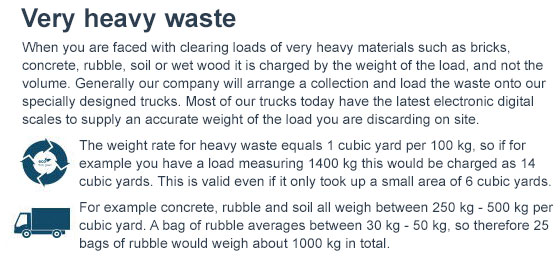
For larger loads, the quotation may depend on whether the job is largely light waste, a few heavy items or a broader mixture that needs more handling. Accurate information is more useful than rounding up or down too much. That keeps the process transparent and helps avoid surprises later. If you are ready to move ahead, send the details you have and request a quotation in one clear message.
Access, sorting and what makes a collection easier
Good access can make a collection simpler, but it does not need to be perfect for the service to work. The key points are whether the load can be reached safely, whether there are tight stairways or narrow corridors, and whether the items are already grouped together or still spread around the property. In many cases, a brief note about the layout is enough to help plan the removal. If waste is mixed, it is often best to keep any hazardous or specialist materials separate and describe them clearly rather than folding them into a general rubbish description.
When a property contains a mixture of loose waste and large items, it can be helpful to state which parts are easiest to lift and which may need extra care. That kind of practical detail is especially useful if the clearance involves shared entrances, basement storage or upper-floor rooms. If you are interested in a broader view of the business and its working approach, the about us page gives the company overview in one place.
A short list can keep the process manageable: what needs removing, where it is, how much there is and anything unusual about access. Then you can ask for a quotation without overcomplicating the request. A concise, accurate message is usually the best way to start.
Recycling, Responsible Disposal and Payment Information
Customers often want to know what happens after the waste has been collected. Responsible disposal matters because different materials need different handling, whether the load contains furniture, packaging, green waste, building remnants or a general mixture. A clear rubbish removal service should be able to separate practical collection from disposal handling, so the job does not end the moment the vehicle is loaded. If you want to read more about waste handling as presented by the business, see the recycling and sustainability page.
Payment and pricing also play a part in how people compare services. Some customers are mainly trying to avoid the inconvenience of moving waste themselves, while others want a straightforward cost structure that matches the size of the load. For that reason, it helps to ask about the quotation format alongside the collection details. If you are comparing how a service handles the transaction side of the job, the payment and security page is available for reference.
Useful planning usually comes down to three things: the waste itself, the access to it and the time needed to remove it. Those points matter more than trying to predict every small detail in advance. If you can describe the main items clearly, the quotation can be shaped around the job rather than around guesswork, and that makes the next step much easier.
About Docklands
Docklands is the name commonly used for the historic eastern riverside and dockland districts of London, an area shaped by maritime trade, later dereliction and large-scale redevelopment. The modern Docklands landscape is a mix of restored waterways, warehouse conversions, towers and planned estates, with Canary Wharf standing out as one of the best-known commercial centres in the district. The area includes places such as West India Quay, the Isle of Dogs and parts of the former dock system that gave the district its name, all of which reflect different phases of London’s growth. The old docks were once part of a busy port network, and although shipping declined after the mid-twentieth century, the waterways remain a defining feature of the landscape. Redevelopment brought new transport links, business districts and housing, while many reminders of the working harbour survive in basin shapes, dock edges and surviving industrial structures. Cultural life in Docklands is tied to both water and city life: there are promenades, riverside walkways, shopping and leisure spaces, and several buildings and public areas that show how the district has moved from warehousing and shipping into a mixed residential and business area. The result is a place where modern architecture sits alongside traces of the older port geography, giving Docklands a strong sense of historical layering and visual contrast.
Household and Trade Clearances Made Simple
When a clearance job is straightforward, the main task is usually to remove the load without making the rest of the day more complicated than it needs to be. That applies whether the waste is a single bulky item, an accumulated mix of household contents or a trade pile left after works. The practical value of the service is in reducing the time and effort you spend shifting, sorting and transporting unwanted material, while still keeping the job properly described and handled.
Our approach is built around the type of rubbish rather than a one-size-fits-all method. That means we can discuss furniture disposal, house clearance, office clearance, garage clearance, builders waste and garden waste as separate service groups, while still treating them as part of one overall removal service. If you need a simpler general option, the waste removal page may help you identify the right wording for your enquiry. The same applies if you are comparing bulkier or more specific loads.
One useful habit is to gather the essentials before you ask for a quote: the main items, the rough amount, where they are stored and whether there are any access issues. That usually gives enough information to start the process properly. If you prefer, you can also note whether the waste is mainly light, mixed or heavy. Then send a clear request for a quotation and the job can be assessed against the actual load.
Booking the Right Service for Your Load
Not every clearance needs the same type of arrangement, and that is why it helps to think in terms of the load rather than the label alone. Some customers need a simple rubbish collection, others need furniture disposal, and some need a broader house or office clearance that includes several kinds of unwanted material. The service works best when the request matches the waste, because that gives a clearer picture of the work involved and the likely collection method.
If you are still deciding which page best fits your job, the main service pages can help you compare options without overcomplicating the decision. You can review the relevant service types, note the one that fits most closely and then send the details in a quotation request. For a focused option on item-based removal, take a look at junk removal, especially if the load is a general mix rather than one single category.
When you are ready, keep the enquiry concise and practical: what needs removing, where it is and what sort of clearance you think it is. That is enough to begin a sensible quotation. If you would like to move ahead, please request a quotation today and we will help you plan the right rubbish removal in Docklands.

Builders Waste Clearance
Read more

Garden Waste Removal
Read more

House Clearance
Read more

Office Clearance
Read more

Rubbish Clearance
Read more

Waste Removal
Read more

Furniture Disposal
Read more

Garage Clearance
Read more

Loft Clearance
Read more

Junk Removal
Read more

Skip Hire
Read more

Rubbish Collection
Read more
Frequently Asked Questions


Prices
Get the Most Affordable Prices on Rubbish Removal Dockland and SE16
Have the most hassle-free rubbish disposal Docklands service available. We have the best deals around SE16 region.
 Tipper Van - Rubbish Removal and Junk Disposal Prices in Docklands, SE16
| Space іn the van | Loadіng Time | Cubіc Yardѕ | Max Weight | Equivalent to: | Prіce (incl tax)* |
| Minimum Load | 10 min | 1.5 | 100-150 kg | 8 bin bags | £90 |
| 1/4 Load | 20 min | 3.5 | 200-250 kg | 20 bin bags | £160 |
| 1/2 Load | 40 min | 7 | 500-600kg | 40 bin bags | £250 |
| 3/4 Load | 50 min | 10 | 700-800 kg | 60 bin bags | £330 |
| Full Load | 60 min | 14 | 900-1100kg | 80 bin bags | £490 |
*Our rubbish removal prіces are baѕed on the VOLUME and the WEІGHT of the waste for collection.
 Luton Van - Rubbish Removal and Junk Disposal Prices in Docklands, SE16
| Space іn the van | Loadіng Time | Cubіc Yardѕ | Max Weight | Equivalent to: | Prіce (incl tax)* |
| Minimum Load | 10 min | 1.5 | 100-150 kg | 8 bin bags | £90 |
| 1/4 Load | 40 min | 7 | 400-500 kg | 40 bin bags | £250 |
| 1/2 Load | 60 min | 12 | 900-1000kg | 80 bin bags | £370 |
| 3/4 Load | 90 min | 18 | 1400-1500 kg | 100 bin bags | £550 |
| Full Load | 120 min | 24 | 1800 - 2000kg | 120 bin bags | £670 |
*Our rubbish removal prіces are baѕed on the VOLUME and the WEІGHT of the waste for collection.
What Our Customers Say

 (68)
(68)
Contact us
Opening Hours: Monday to Sunday, 08:00-23:00
Postal code: SE16 7TX
City: London
Country: United Kingdom
Web: https://rubbishremovaldocklands.org.uk/
Description: Rubbish removal in Docklands for homes, flats, offices and trade waste, with clear service options, pricing guidance and an easy quote request.
Sitemap